2026-10-15 ·
Preventing Mold After Plumbing Leaks in Littlerock Homes
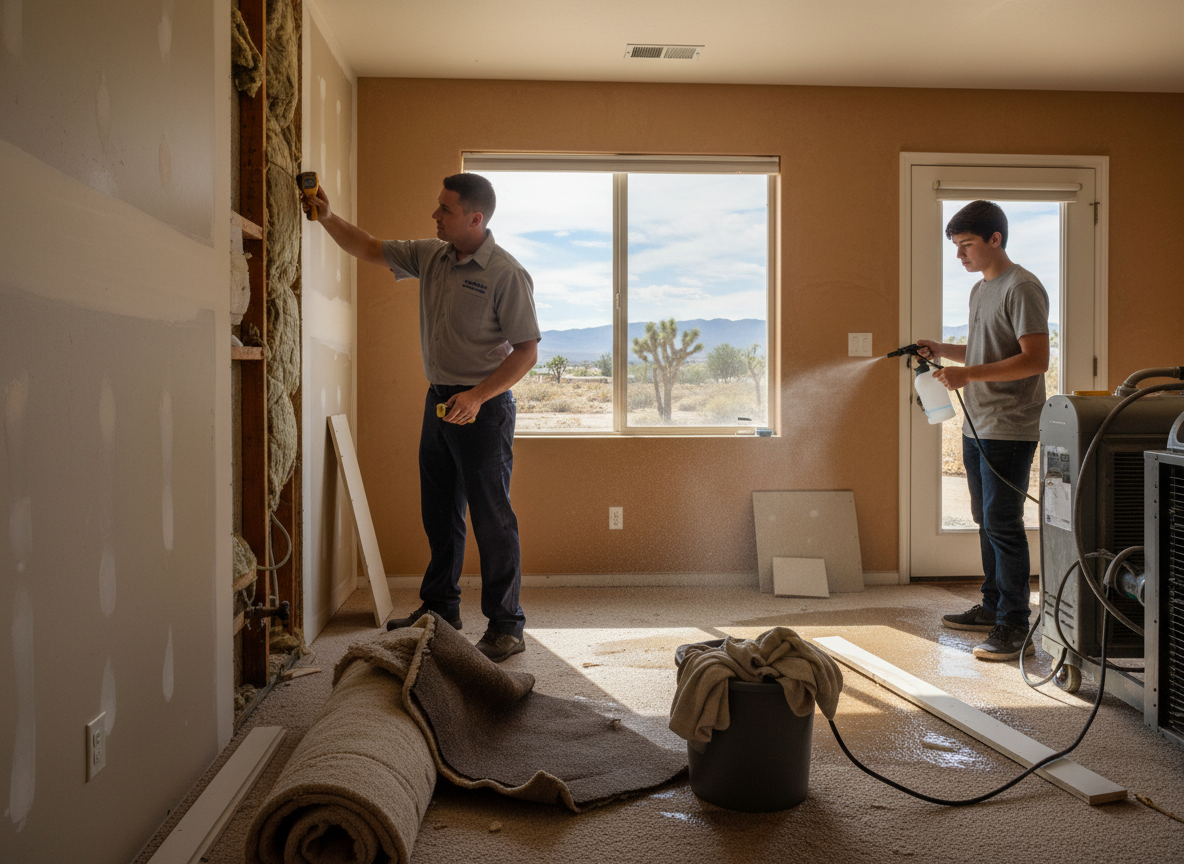
Act within 24-48 hours after a plumbing leak to stop mold growth in Littlerock homes. Desert conditions with hot summers and cool winters create rapid evaporation on surfaces but leave trapped moisture in walls, floors, and crawl spaces that feeds mold colonies. Homes built decades ago around Littlerock Community Park often have older plumbing that leaks behind fixtures or under slabs, and the arid air outside can mask the problem until musty odors appear.
Immediate Steps After Discovering a Leak
Shut off the water supply at the main valve first, then document the affected areas with photos before any cleanup begins. Remove standing water using extraction equipment to pull moisture from carpets and flooring, focusing on rooms near kitchens or bathrooms where leaks commonly originate. In Littlerock's cool winter nights, open windows only during the warmest parts of the day to avoid pulling in humid air that slows drying. Check under sinks and around water heaters for hidden drips that travel along joists into adjacent rooms.
Contact a professional for water leak restoration if the leak has soaked drywall or insulation, since DIY fans alone rarely reach behind surfaces. Homes in Los Angeles County near Palmdale often sit on expansive soil that shifts with moisture changes, creating new cracks that let water spread further. Monitor humidity levels with a meter and keep them below 55 percent indoors during the process.
Why Littlerock's Desert Climate Increases Mold Risk
Hot summer days above 100 degrees dry exterior surfaces fast but push moisture deeper into cooler wall cavities and attics where temperatures stay lower. Cool winter evenings bring condensation on pipes that have already leaked, extending the window for mold to establish on wood framing. Properties close to Littlerock Dam experience slightly higher groundwater influence during rare heavy rains, which combines with plumbing issues to saturate crawl spaces that lack proper ventilation. Older single-story homes common in the area frequently have limited access points, making thorough drying harder without specialized tools.
Mold spores are always present in the air here, but they only grow when moisture stays above 60 percent for more than a day or two. Plumbing leaks under slabs in Lancaster-adjacent neighborhoods can travel under concrete for several feet before surfacing, leaving hidden wet soil that later affects indoor air quality.
Drying Techniques That Work in Arid Conditions
Use commercial dehumidifiers sized for the square footage rather than household units, running them continuously for at least 72 hours after visible water is gone. Place air movers to create airflow across wet materials without pushing moist air into unaffected rooms. For attics common in Littlerock homes, cut small inspection openings to check insulation and rafters before sealing everything up. Floor joists and subflooring need direct heat and airflow because desert nights cool them quickly and trap residual moisture.
Inspecting Your Littlerock Property for Hidden Water Damage helps identify leaks that reach behind tile or under vinyl before mold appears. Avoid sealing wet areas too soon, as trapped humidity in Los Angeles County homes can lead to growth on drywall backing within a week.
When to Call for Professional Mold Remediation
If musty smells persist after three days of drying or dark spots show on baseboards, schedule mold remediation after water damage right away. Professionals use moisture meters to locate pockets in framing that homeowners miss, especially in homes near Pearblossom Highway where older construction leaves gaps. They also remove and dispose of saturated insulation that cannot be salvaged, preventing spores from circulating through HVAC systems during summer cooling cycles.