2026-10-15 ·
How to Handle Flash Flood Damage in Your Littlerock Home
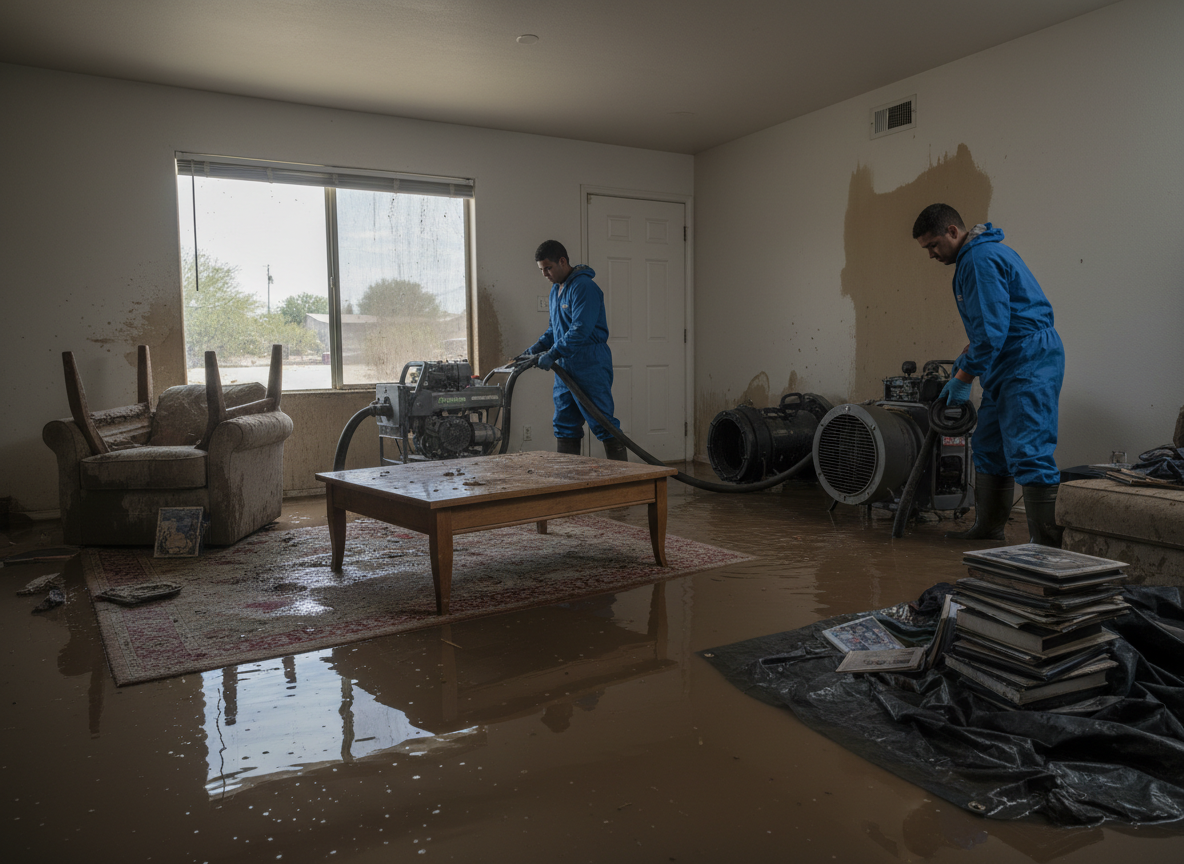
Handling flash flood damage in your Littlerock home starts with immediate safety checks followed by water extraction inside the first 24 hours to stop structural swelling in older single-story homes common throughout Los Angeles County. Desert storms dump water faster than the ground can absorb it, sending runoff toward properties along Pearblossom Highway and around Littlerock Dam. Quick action prevents saturated drywall and flooring from feeding mold during the cool winter nights that follow.
Prioritizing Safety After a Flash Flood
Turn off electricity and gas at the main panel before entering any flooded space. Standing water near outlets or appliances creates shock hazards that residents in Littlerock often overlook until after the fact. Wear rubber boots and gloves while checking for structural cracks around foundations, especially in homes built before modern grading standards took hold near Littlerock Community Park. If water reaches electrical boxes or the crawl space, leave the building and call for help rather than attempting cleanup yourself. Document visible damage with photos once it is safe to move through each room.
Removing Standing Water Quickly
Use a wet vac or submersible pump to pull water from floors within hours of the flood receding. In Littlerock's flat terrain, water pools against slab foundations and stays trapped under cabinets and appliances longer than in hilly areas. Focus first on living areas and kitchens where hardwood or laminate can buckle overnight. Remove area rugs and lift furniture onto blocks to allow airflow underneath. For deeper flooding that reaches wall cavities, cut away the bottom 12 to 18 inches of drywall to release trapped moisture before it migrates upward.
Drying Out Your Home in Littlerock's Climate
Desert air helps evaporate surface moisture faster than humid regions, yet hidden pockets inside walls and under subfloors retain water for days. Run commercial air movers and dehumidifiers continuously for at least 72 hours, aiming for indoor humidity below 50 percent. Position fans to push air across wet concrete slabs common in Littlerock construction rather than just circulating room air. Monitor moisture meters on framing lumber and insulation to confirm readings drop below 15 percent before closing cavities. Drying Wet Materials in Littlerock's Arid Summer Conditions explains how seasonal swings affect these timelines.
Addressing Potential Mold Growth
Mold spores activate within 24 to 48 hours in any remaining damp material, even during cool winter periods. Check behind baseboards and inside closets where airflow is limited. Clean non-porous surfaces with a detergent solution, then apply an antimicrobial treatment to framing once it tests dry. Homes near Palmdale often see secondary growth in attics when roof leaks from wind-driven rain go unnoticed. If discoloration appears on drywall or insulation smells musty, remove and replace those materials rather than attempting surface cleaning alone. Preventing Mold After Plumbing Leaks in Littlerock Homes covers similar prevention tactics that apply after floods.
When to Call Professional Help
Large volumes of water or contamination from outdoor runoff usually require equipment and containment beyond what homeowners have on hand. Emergency water removal teams bring extraction trucks and moisture mapping tools that locate hidden saturation in slab homes throughout the area. Flood restoration services also handle disposal of damaged materials and coordinate with insurance adjusters familiar with Los Angeles County claims. For cost considerations specific to Littlerock properties, review What Affects Water Damage Repair Costs Around Littlerock. Contact crews available 24/7 at 7704 Pearblossom Hwy when water has reached multiple rooms or entered the electrical system.