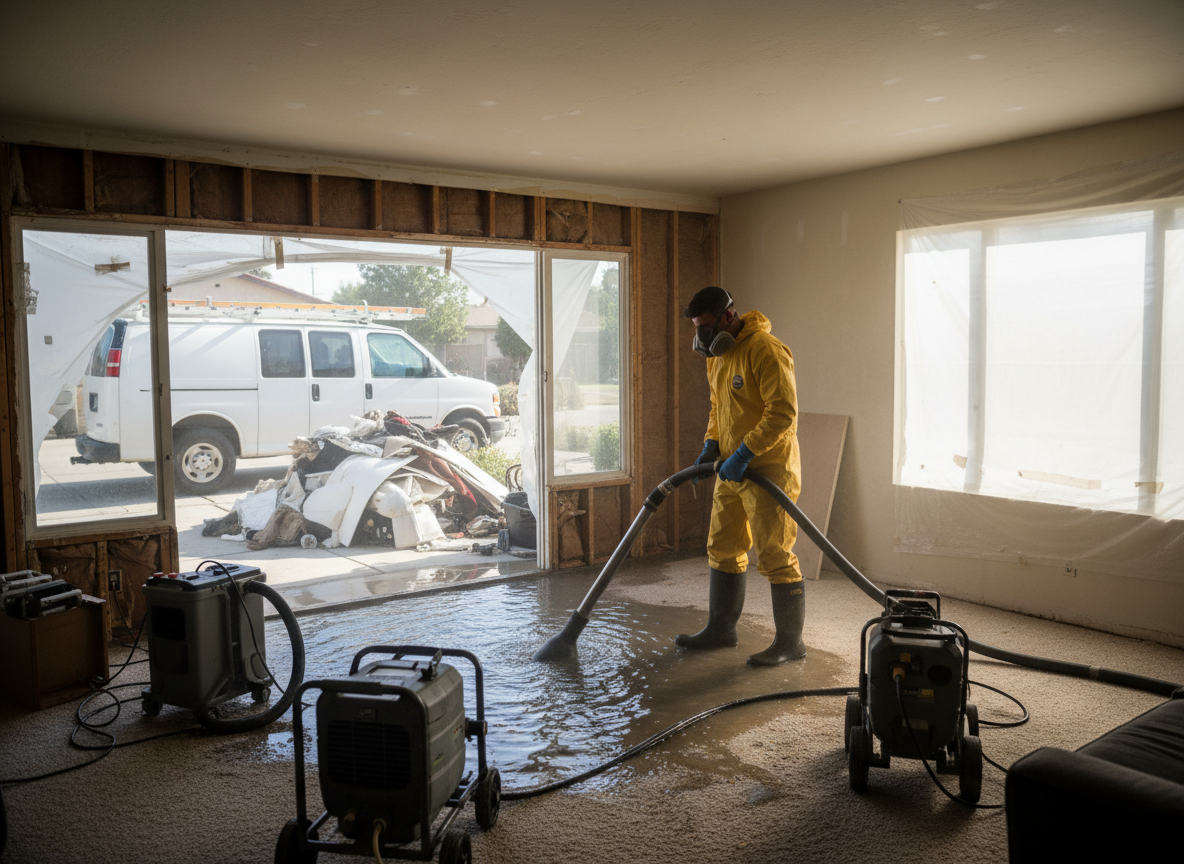
Flood restoration in Littlerock requires quick response to water that enters through slab foundations common in Los Angeles County homes built decades ago. Desert flash flooding can push water under flooring and into wall cavities near the Littlerock Dam spillway or properties along Pearblossom Hwy. Technicians must extract standing water immediately then use moisture meters to locate hidden saturation that cool winter nights can prolong, raising the risk of mold growth in older drywall and insulation.
Edge cases appear when water reaches electrical outlets or HVAC returns in single-story ranch homes typical around Littlerock Community Park. Los Angeles County code requires full removal of affected porous materials once moisture exceeds safe thresholds, and skipping this step often leads to callbacks weeks later. Crews also address soil saturation around foundations that can wick moisture back into crawl spaces during the next rain event.
Homeowners sometimes attempt DIY drying with box fans, which fails against the volume of water that collects in low-lying yards near Lancaster Road. Professional equipment includes air movers and dehumidifiers sized for the square footage, plus antimicrobial treatments on remaining structural wood. Final clearance testing confirms dryness before any reconstruction begins to avoid trapped moisture that reappears during hot summer months.
Technician insight
In Littlerock, the thing that catches most people out with Flood restoration services is how desert flash floods pool against older slab foundations near the Littlerock Dam and then wick moisture into subflooring that stays damp through cool winter nights, turning a visible cleanup into hidden mold weeks later.
Sudden Inflow Near Littlerock Dam
Water entered a home off Pearblossom Hwy after overnight rains overflowed local drainage. Inspection showed saturation under vinyl flooring and into base cabinets. Extraction and targeted drying prevented further spread into adjacent rooms and allowed the family to return without demolition beyond the affected baseboards.
How it works
- 1
Emergency Assessment
Arrive on site within hours to document water source, affected rooms, and safety hazards in the Littlerock residence.
- 2
Water Extraction
Remove standing water using truck-mounted pumps and portable extractors suited for slab and carpeted areas.
- 3
Drying and Monitoring
Place industrial drying equipment and check moisture levels daily until materials reach acceptable dryness.
- 4
Sanitization and Clearance
Apply treatments to prevent microbial growth and perform final testing before handing the space back to the owner.
Pricing
Pricing is determined after inspection and varies with water volume, materials affected, and drying time required.