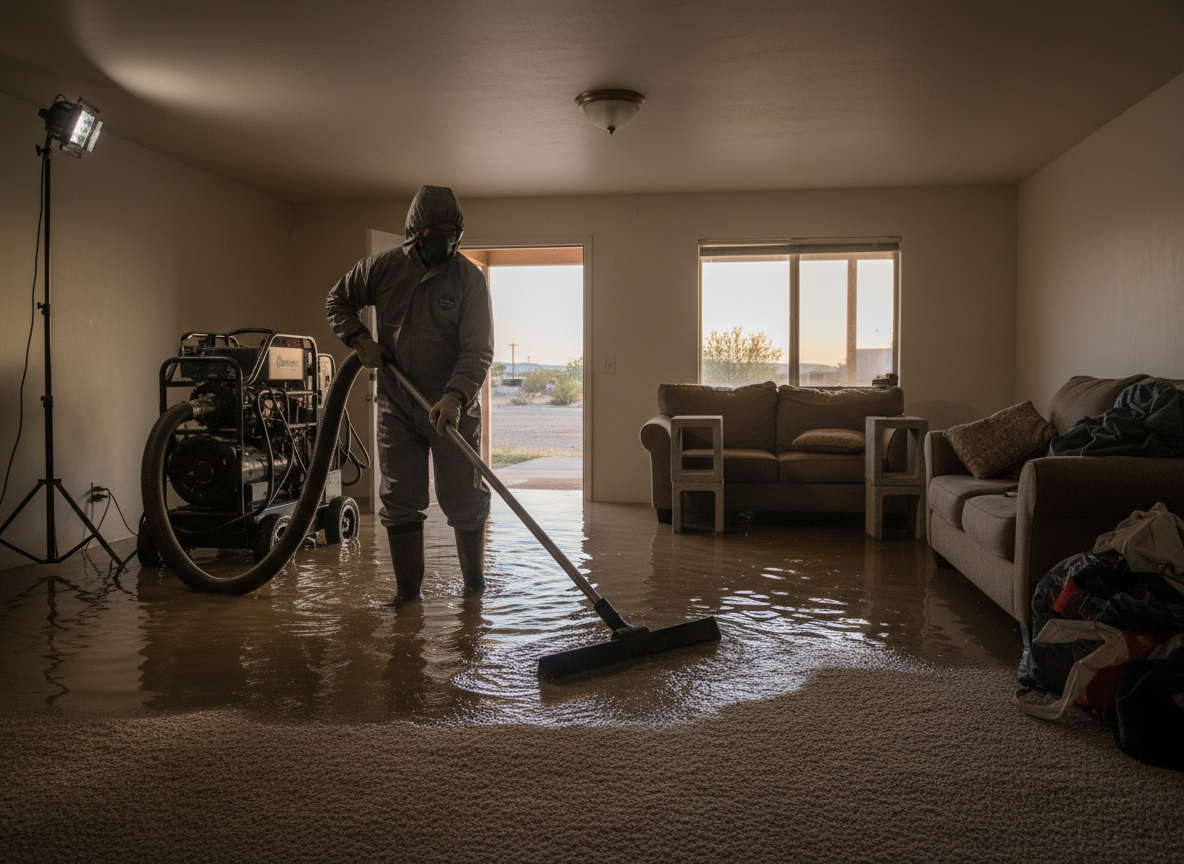
In Littlerock's desert climate, sudden winter rains and occasional overflow from the Littlerock Dam send water into crawl spaces and slab foundations that sit on hard-packed soil. Older single-story homes built decades ago often lack proper French drains, so water pools instead of running off toward Palmdale or Lancaster roads. Emergency water removal here starts with locating every pocket behind stucco or under vinyl flooring before mold sets in during the cool, still nights.
Extraction equipment must handle both standing water and the fine silt that desert runoff carries, which clogs standard pumps faster than in coastal Los Angeles County jobs. After pulling the bulk, technicians place air movers and dehumidifiers in a closed loop because the low humidity outside can actually pull moisture back into walls if the house is opened too soon. Homes near Littlerock Community Park frequently need extra attention to irrigation lines that crack when summer heat expands the clay soil.
Code requires proper disposal of any water that contacts sewage lines, common in older Littlerock properties with septic systems. Skipping the final moisture mapping leaves hidden dampness that returns weeks later when temperatures drop again. Crews document every reading because insurance adjusters in the Antelope Valley want proof the structure reached dry standards before they release funds.
Technician insight
In Littlerock, the thing that catches most people out with Emergency water removal is the hard desert soil around older homes near the Littlerock Dam. After winter rains the ground stays saturated for weeks, so water keeps wicking back into crawl spaces long after the rain stops. Homeowners often open windows too early, thinking the dry air outside will help, but that just moves moisture into the walls.
Flash runoff into crawl space
Heavy rain sent water from the Littlerock Dam area under a 1970s home on Pearblossom Highway. We found standing water and silt against the foundation footings with no visible entry point from inside. Extraction and targeted drying prevented mold growth in the subfloor before the next temperature drop.
How it works
- 1
On-site assessment
Technician arrives within the hour, maps water migration using moisture meters, and identifies affected materials in crawl spaces or under slabs common in Littlerock homes.
- 2
Water extraction
High-volume pumps and wands remove standing water while containing silt from local runoff, preventing further saturation of desert soil around the foundation.
- 3
Drying and monitoring
Air movers and dehumidifiers run in sealed zones; daily readings track moisture levels until the structure meets industry dry standards.
- 4
Final verification
Technician rechecks all surfaces and provides documentation for insurance before equipment is removed.
Pricing
Upfront quotes based on water volume, affected square footage, and whether silt or sewage contamination is present.