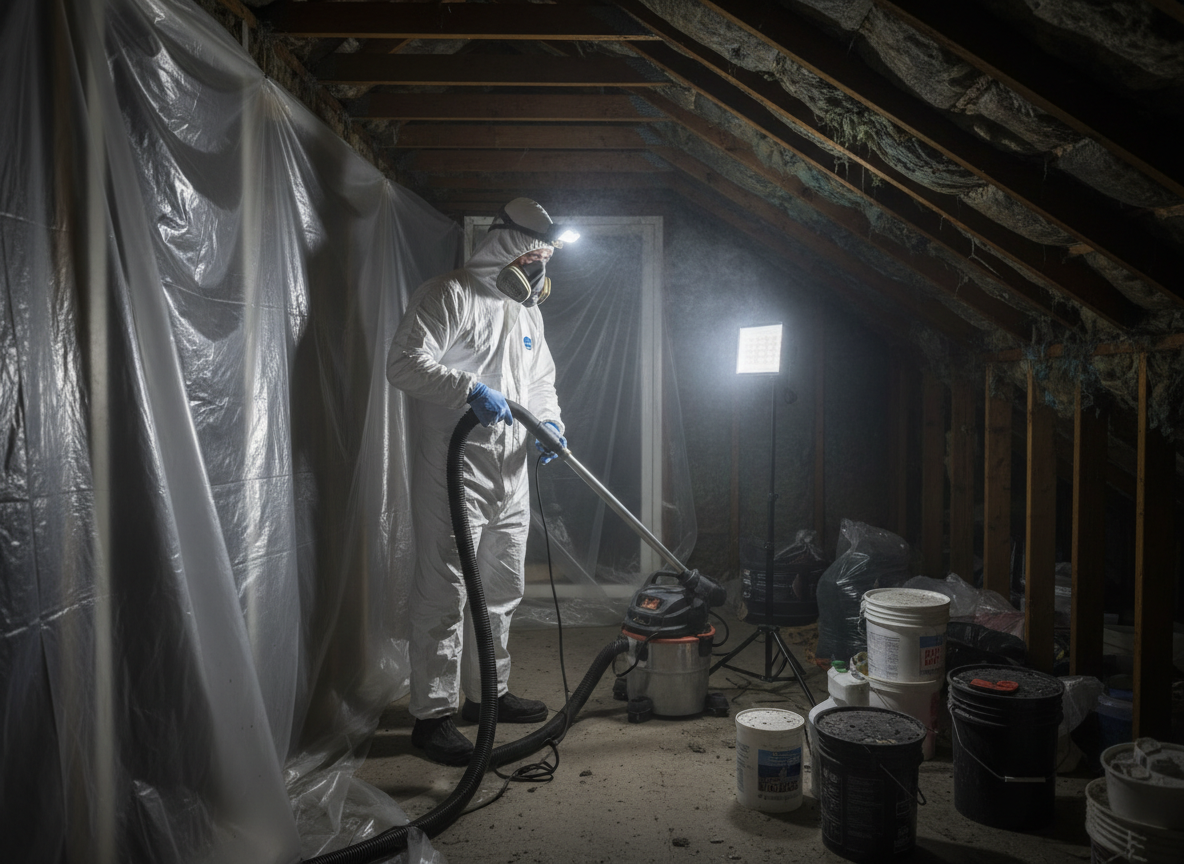
Littlerock's older single-story ranch homes often feature vented attics with fiberglass batts or blown cellulose that trap moisture when roof penetrations around swamp coolers or HVAC lines fail. Desert temperature swings between hot days and cool nights create condensation on sheathing even without heavy rain, especially in homes built before current ventilation codes. We remove affected insulation, treat rafters with EPA-registered antimicrobials, and improve airflow to prevent recurrence while protecting the rest of the structure from cross-contamination.
Access in these properties frequently means working around low-pitch roofs and limited ridge vents common along Pearblossom Highway corridors. We stage containment from the exterior when possible to avoid disturbing living spaces below, then use negative air machines exhausted through existing gable vents. Los Angeles County requirements for proper disposal of moldy materials apply once visible growth exceeds ten square feet, so we document moisture readings and photo evidence before any demolition begins.
Irrigation runoff from nearby agricultural edges and occasional heavy winter storms can send water under eaves into attics of homes bordering Littlerock Community Park. Homeowners often discover the issue only after ceiling stains appear, by which point spores have spread through the insulation. Our crews test for hidden moisture with infrared cameras, remove saturated sections in sealed bags, and replace with new material matched to the original R-value to maintain energy efficiency in the extreme summer heat.
Post-remediation clearance includes third-party air sampling when requested and a written report suitable for insurance adjusters in Palmdale and Lancaster claims. We coordinate with local roofers for any simultaneous leak repairs so the attic stays dry once work is complete.
Technician insight
In Littlerock, the thing that catches most people out with attic mold remediation is how our big daily temperature swings create condensation on the underside of older composition roofs even when there hasn't been a leak in months, especially in the single-story homes east of the Littlerock Dam where ridge vents were never upgraded.
Hidden Condensation in East Littlerock Attic
A homeowner near Littlerock Community Park noticed ceiling spots after a cool snap. We found widespread surface mold on sheathing caused by nightly condensation rather than a new leak. We removed the affected cellulose, treated the rafters, added ridge venting, and the attic stayed dry through the following summer.
How it works
- 1
Initial Inspection
We arrive 24/7, assess attic access points, map moisture with thermal imaging, and identify the water source tied to Littlerock's roof or plumbing conditions.
- 2
Containment Setup
Plastic barriers and negative air machines isolate the work area to prevent spores from entering living spaces below.
- 3
Removal and Treatment
Affected insulation and drywall are removed in sealed bags, rafters are cleaned and treated, and hidden moisture pockets are dried.
- 4
Drying and Verification
Dehumidifiers run until readings meet industry dry standards, followed by clearance testing before new materials are installed.
- 5
Prevention Recommendations
We advise on ventilation upgrades suited to desert swings and coordinate with roof repairs common in the area.
Pricing
Cost depends on attic size, extent of hidden growth, and whether roof access or insulation replacement is required.