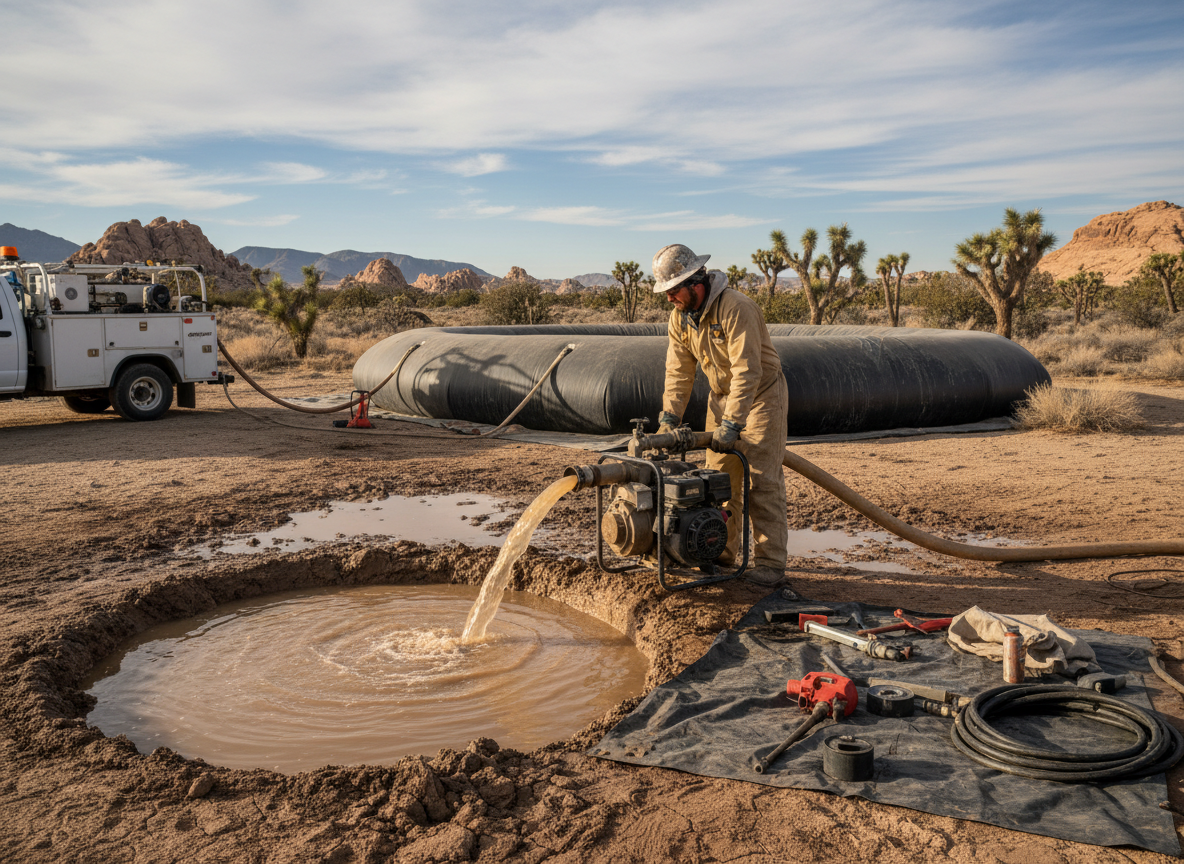
Littlerock sits in a high-desert zone where sudden summer thunderstorms and winter runoff from the San Gabriel Mountains can send water into crawl spaces and slab foundations within minutes. Extraction crews must account for the area's coarse sandy soils that let moisture travel laterally under homes faster than in the clay belts closer to Lancaster. Equipment choice matters: high-volume truck mounts pull standing water from garages and utility rooms while leaving behind the fine silt common near Littlerock Dam that clogs standard shop-vacs.
Older single-story ranch homes built along Pearblossom Highway and around Littlerock Community Park often have post-tension slabs with limited access points. Technicians cut strategic weep holes only after mapping plumbing and electrical runs, then use moisture meters to confirm the slab has reached acceptable drying levels before sealing. In cool winter nights the temperature swing can push hidden moisture back to the surface, so crews return for follow-up readings rather than relying on a single visit.
Palmdale commuters who keep RVs or work trucks on gravel pads frequently see water pool against foundation stem walls during monsoon events. Extraction here includes pulling water from under vehicle lifts and through compacted gravel that holds moisture against wood framing. Failure to remove that layer allows dry-rot to start at the base plates even when the interior floor feels dry to the touch.
Technician insight
In Littlerock, the thing that catches most people out with water extraction is the sandy soil around the Littlerock Dam letting water travel under post-tension slabs and reappear on cool winter nights long after the pumps leave.
Runoff into garage near Littlerock Community Park
Heavy winter rain sent water under a 1970s ranch garage slab from the park drainage. Extraction revealed moisture had wicked into the sill plates along the north wall. Crews pulled standing water, opened weep points, and returned twice over three nights until meter readings stabilized. Homeowner avoided base-plate replacement by catching the re-wetting early.
How it works
- 1
Site Assessment
Technicians arrive from the Pearblossom Highway base, map water depth, identify entry points from the dam watershed, and locate utilities before any equipment enters the structure.
- 2
Standing Water Removal
High-capacity pumps and wands extract bulk water from slabs, crawl spaces, and garages while containing the silty sediment typical of Littlerock runoff.
- 3
Moisture Mapping
Infrared and pin meters trace hidden moisture in walls and under flooring, noting how desert temperature drops at night can drive vapor back into finished surfaces.
- 4
Final Verification
Return visits confirm drying targets are met before any reconstruction or sealing work begins, preventing callbacks common in the area's variable winter humidity.
Pricing
Cost depends on water volume, access difficulty under slabs, and number of return visits needed for nighttime re-wetting in the desert climate.