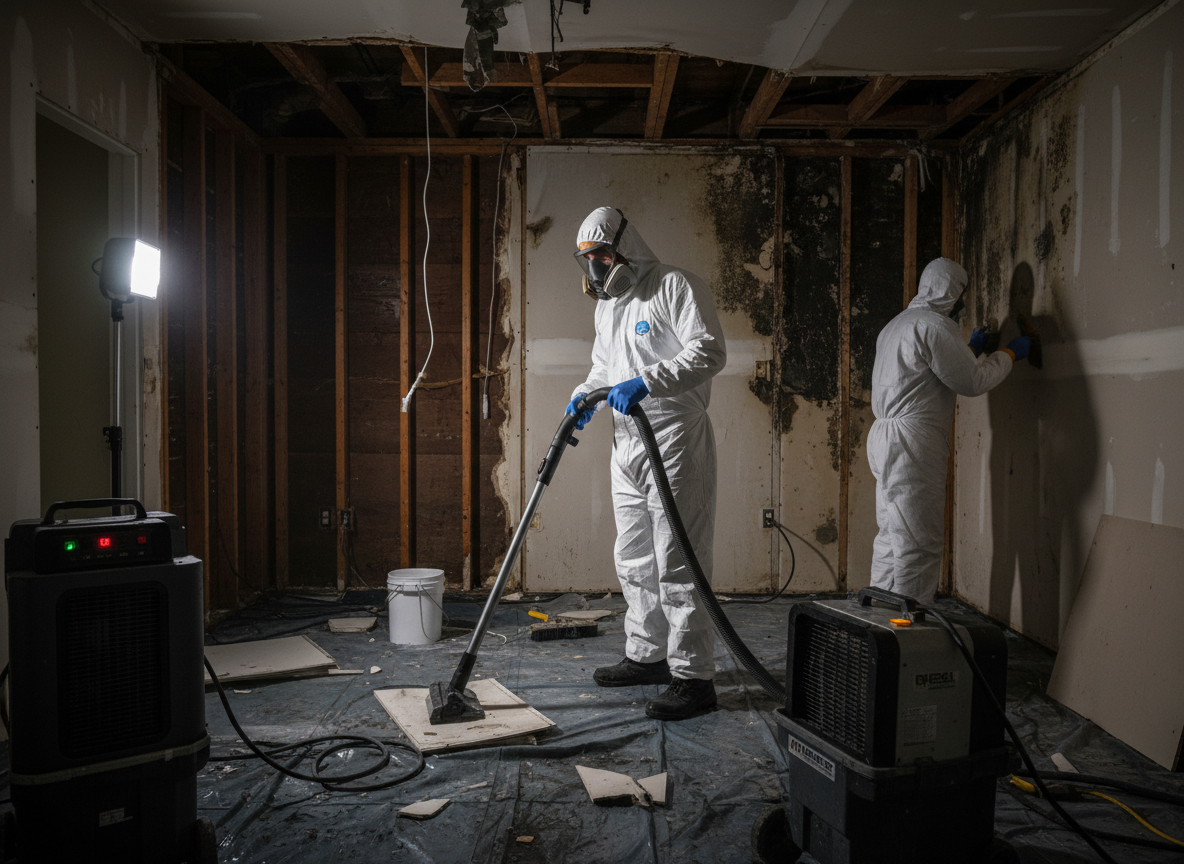
Desert conditions in Littlerock create unique challenges for mold remediation after water damage. Hot summer days combined with cool winter nights often lead to condensation inside wall cavities and attics of older single-story homes. When leaks occur from aging plumbing or roof issues common in Los Angeles County properties, moisture lingers in stucco and wood framing, allowing hidden colonies to form behind drywall before homeowners notice musty odors.
Work near Littlerock Dam and along Pearblossom Highway frequently involves properties with crawl spaces that sit close to the ground. These areas collect runoff during rare but intense rain events and hold humidity longer than open terrain. Remediation here requires removing affected insulation and treating joists without disturbing the original slab foundations that many local homes retain from earlier construction periods.
Airflow patterns in the Antelope Valley region can carry spores into adjacent rooms or even neighboring houses in Littlerock and nearby Palmdale. Containment barriers must account for this movement, especially when HVAC systems pull air from attics or garages. Technicians test multiple rooms and use negative air machines to prevent cross-contamination during removal of porous materials like carpet pad and baseboards.
Final clearance testing focuses on moisture levels in concrete slabs and wood framing that retain water long after surface drying. In cool winter months, dehumidification runs longer to reach safe readings before new finishes are installed. This step prevents recurrence in homes where residents may not notice slow leaks until mold has already spread.
Technician insight
In Littlerock, the thing that catches most people out with Mold remediation after water damage is how desert winds push spores through attic vents in older homes near the dam. A small bathroom leak can travel across the entire ceiling because single-story construction with minimal insulation lets air move freely between rooms during hot afternoons.
Crawl Space Growth After Winter Leak
A homeowner near Littlerock Community Park noticed a musty smell after a pipe drip during cool weather. Inspection found colonies on floor joists and insulation in the crawl space. Crews contained the area, removed saturated materials, treated the framing, and ran dehumidifiers for several days until readings stabilized. Clearance tests passed and the space was sealed against future moisture.
How it works
- 1
Initial Assessment
Inspect all affected rooms, attics, and crawl spaces using moisture meters and thermal imaging to locate hidden water from leaks or flooding.
- 2
Containment Setup
Install plastic barriers and negative air machines to isolate the work area and prevent spore migration through the home or into neighboring properties.
- 3
Material Removal
Cut out and dispose of moldy drywall, insulation, and baseboards while HEPA vacuuming surfaces in Littlerock homes with older construction.
- 4
Drying and Treatment
Apply antimicrobial solutions to framing and run commercial dehumidifiers until moisture readings drop below safe thresholds for the desert climate.
- 5
Clearance Testing
Perform air quality samples and visual checks before allowing reconstruction to confirm the space is ready for normal use.
Pricing
Cost depends on square footage affected, depth of hidden growth in walls or crawl spaces, and drying time required by seasonal conditions; request an upfront assessment.