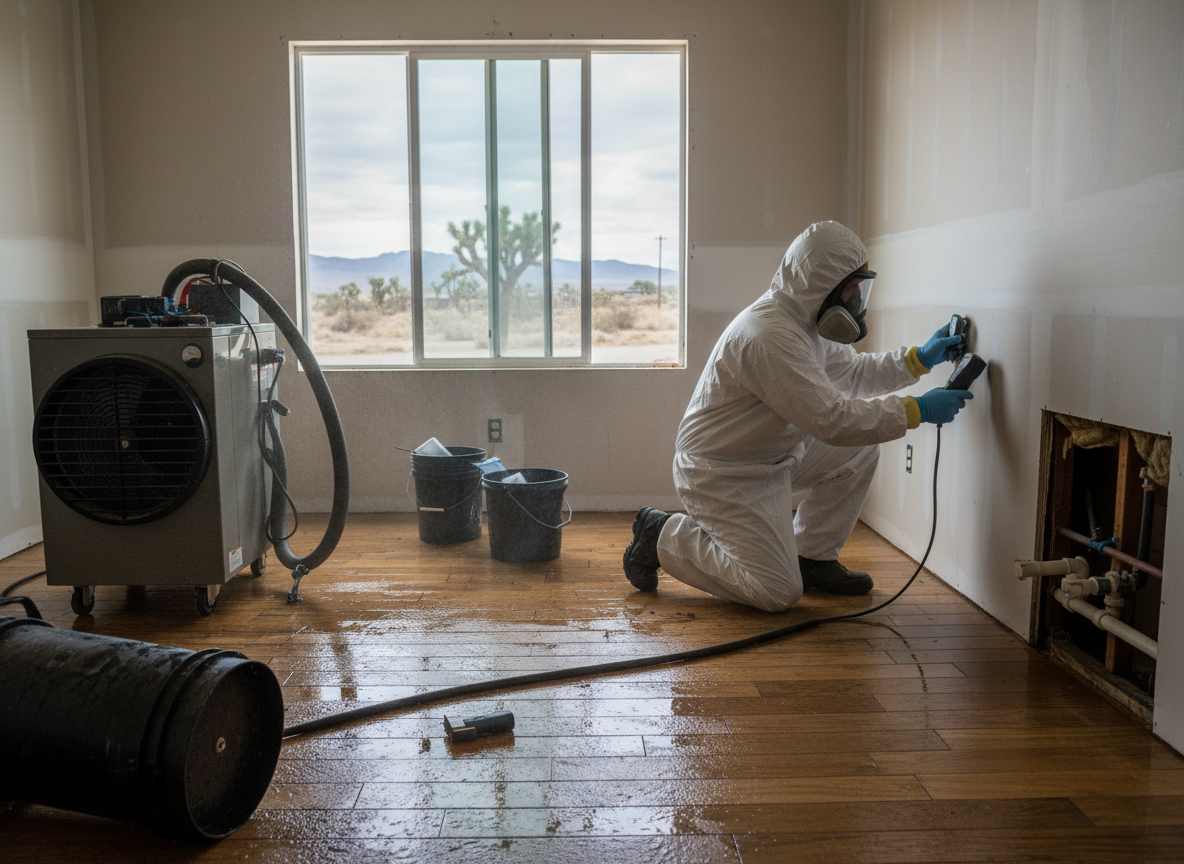
Water leaks in Littlerock often stem from aging galvanized pipes in homes built before the 1980s expansion near Pearblossom Highway. Desert heat expands and contracts these lines during hot summers, while cool winter nights cause contraction that opens small pinholes. When a leak occurs under slab foundations common in the area, moisture migrates through the alkaline soil and wicks into drywall and baseboards. Technicians must map moisture with thermal imaging before any demolition because the dry climate masks visible signs until mold colonies appear weeks later.
Extraction equipment must account for low humidity that speeds surface drying but leaves hidden pockets in wall cavities near Littlerock Dam. In these cases, technicians install negative air machines and monitor relative humidity at multiple depths in the framing. Los Angeles County building codes require documentation of moisture levels below 15 percent before any new drywall installation, especially after leaks that reach the crawl spaces found in many single-story homes around Littlerock Community Park. Skipping this step leads to recurring musty odors when winter temperatures drop.
Edge cases include irrigation line breaks common along properties bordering agricultural zones between Littlerock and Palmdale. These leaks introduce sediment that clogs dehumidifiers and requires additional filtration steps. Technicians also watch for electrical hazards when leaks reach outlets in older homes that predate current grounding standards. Proper sequencing prevents secondary damage to hardwood floors that expand when exposed to prolonged moisture in this arid region.
Technician insight
In Littlerock, the thing that catches most people out with water leak restoration is how the cool winter nights around the Littlerock Dam let small irrigation or slab leaks stay hidden until they reach interior walls, because the desert air dries the surface so fast homeowners never see the water.
Slab Leak Near Pearblossom Highway
A homeowner noticed warm floors and a slight musty smell after the first cool snap. Inspection revealed a pinhole leak in an old copper line under the slab. Water was extracted, the cavity dried over five days, and new flooring was installed once readings stayed below target levels.
How it works
- 1
On-Site Assessment
Technicians arrive within hours, locate the leak source, and document moisture migration through affected materials using meters and imaging.
- 2
Water Extraction and Containment
Standing water is removed with truck-mounted pumps while barriers protect unaffected areas of the home.
- 3
Drying and Monitoring
Industrial air movers and dehumidifiers run until moisture readings reach safe levels, with daily checks to adjust equipment placement.
- 4
Restoration and Verification
Damaged materials are replaced and final moisture verification confirms the structure is dry before homeowners return.
Pricing
Upfront quotes provided after inspection; cost depends on leak location, materials affected, and drying time required.