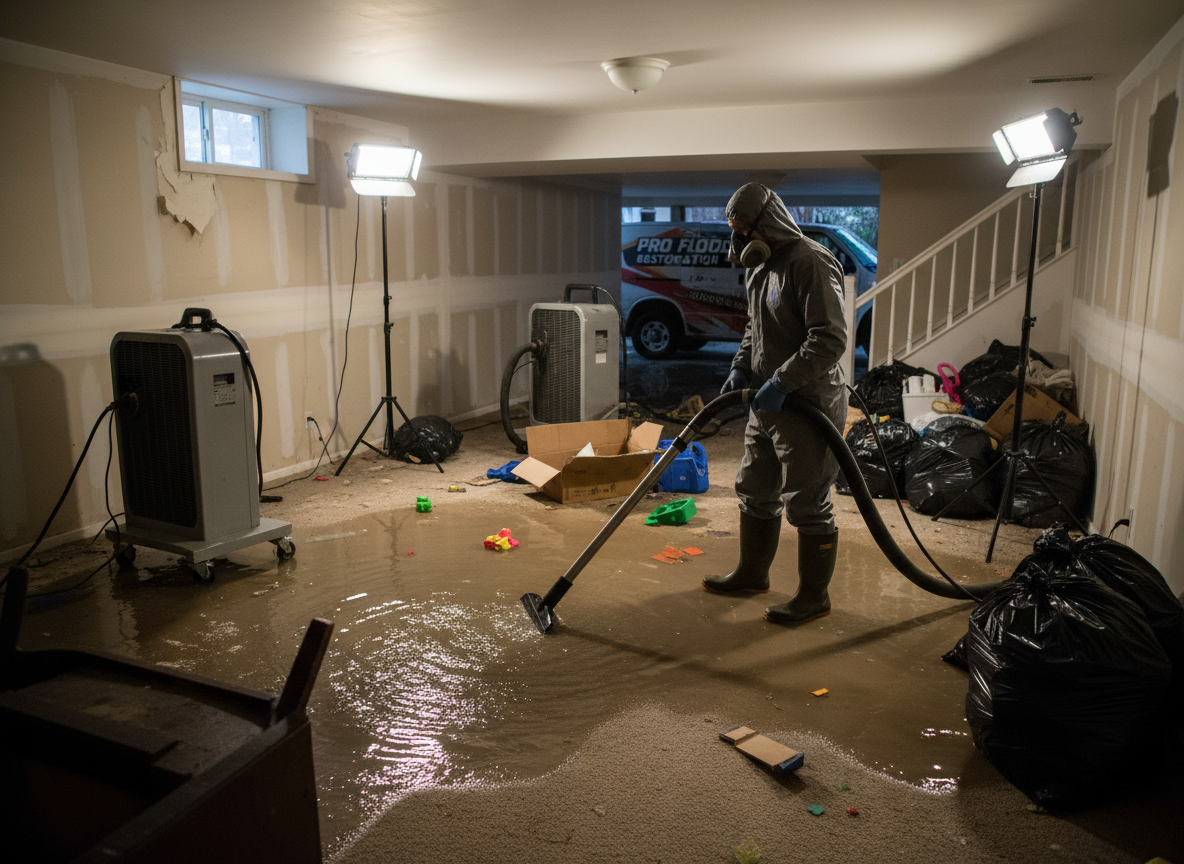
Littlerock sits in the high desert of Los Angeles County where sudden summer thunderstorms can dump inches of rain in hours. Many homes built before the 1990s along Pearblossom Highway and near Littlerock Dam have partial basements or cellars that collect water when drainage ditches overflow. We extract standing water, remove saturated drywall and insulation, and use industrial dehumidifiers sized for the dry air that returns once storms pass. Homes near Littlerock Community Park often sit on clay-heavy soil that holds moisture against foundations for days, so we monitor moisture readings at multiple depths before closing walls.
Palmdale and Lancaster residents with properties in Littlerock frequently call after winter cool spells bring slow, steady rain that saturates older concrete. We separate clean floodwater from any sewage backups common when septic systems back up during heavy flows. Contaminated material goes into sealed bags for disposal at county-approved sites. Every job includes negative-air machines to keep dust and spores from migrating into living areas above the basement. We document all steps with photos for insurance adjusters who cover properties from the Antelope Valley down to Littlerock.
After extraction we apply EPA-registered antimicrobials only where mold risk is confirmed by moisture meters. Desert temperature swings of forty degrees between day and night can cause hidden condensation behind baseboards, so we run air movers for several days and recheck readings. Access is often tight in older Littlerock crawlspaces converted to storage, requiring us to cut additional vents to speed drying without damaging load-bearing walls.
We coordinate with local utility districts when storm drains along 77th Street East back up and push water into basements. Final clearance includes a written drying log showing relative humidity below 50 percent and no elevated moisture in framing. This prevents callbacks when the next monsoon season arrives.
Technician insight
In Littlerock the thing that catches most people out with Basement flood cleanup is how fast the high-desert clay holds water against the foundation after a short storm. Homes near the dam often have older stem walls with no French drain, so water sits against the concrete for days even when the surface looks dry. We always pull baseboards early because the temperature swing at night pulls hidden moisture back into the drywall.
Flash flood after monsoon rain
A homeowner near Littlerock Community Park called after a summer storm sent water through the basement door. We found six inches of water against the east wall where the lot slopes toward the old irrigation ditch. Extraction and targeted drying prevented mold growth in the 1970s framing, and the basement was back to normal use within five days.
How it works
- 1
Emergency Assessment
We arrive within hours, locate the water source, and map affected materials while protecting unaffected areas.
- 2
Water Extraction
Truck-mounted pumps and portable extractors remove standing water from the basement floor and any sump areas.
- 3
Drying and Monitoring
Air movers, dehumidifiers, and moisture meters run until readings match pre-loss conditions in the desert climate.
- 4
Sanitizing and Documentation
We treat affected surfaces and provide a complete drying report for insurance claims.
Pricing
Cost depends on water volume, depth of saturation, and whether drywall or flooring must be removed.