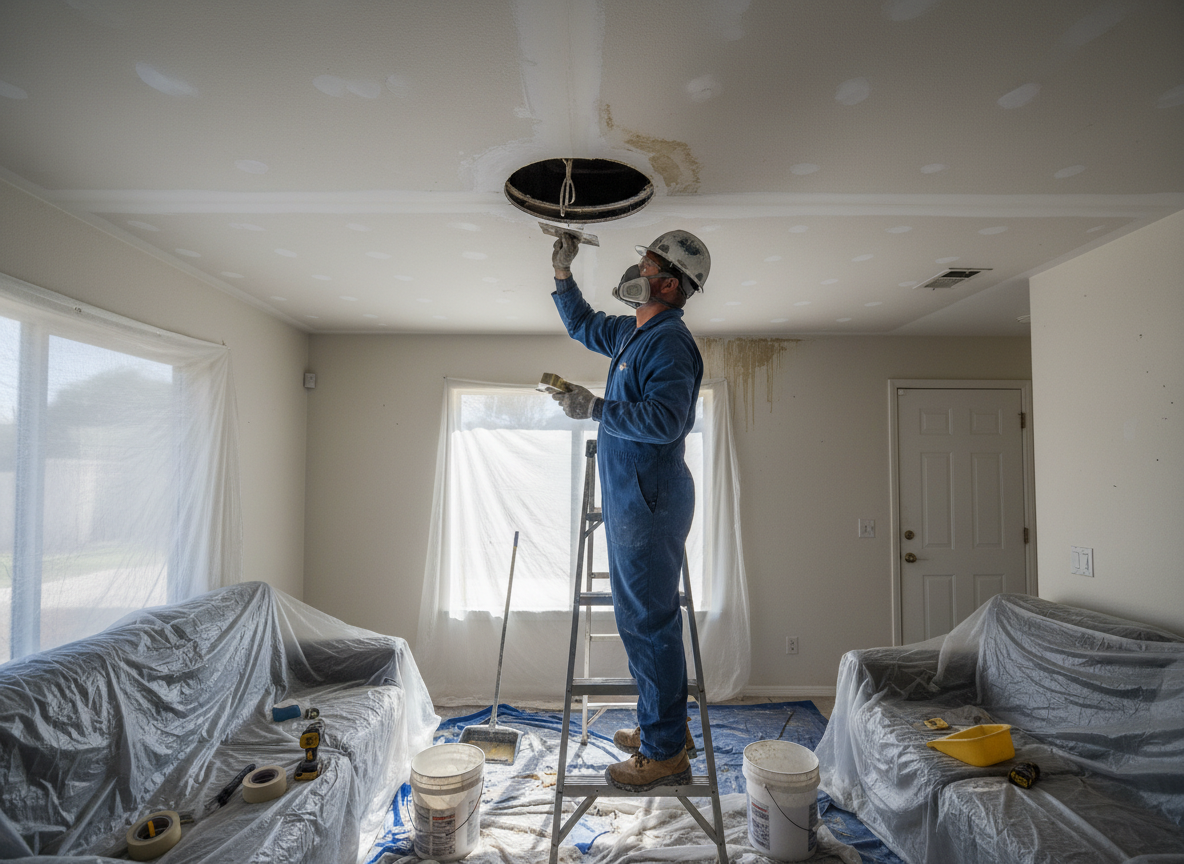
In Littlerock homes built decades ago along Pearblossom Highway, ceiling water damage often starts from roof penetrations around swamp coolers or HVAC lines that fail during the shift from hot summer days to cool winter nights. Dry desert air hides active leaks until drywall sags or mold spots appear weeks later. Technicians must open larger inspection areas than in humid regions because moisture travels farther through the open attic spaces common in single-story ranch houses here.
Los Angeles County code requires full removal of wet cellulose insulation and affected drywall once moisture readings exceed 15 percent, especially near Littlerock Community Park where wind-driven rain can push water under eaves. Crews use moisture meters on both sides of the ceiling and check for hidden saturation in the joist bays before any patching. Skipping this step leads to recurring stains when the next cool front moves through the Antelope Valley.
Access challenges increase near the Littlerock Dam area where many properties sit on sloped lots with limited crawl space above. Restoration teams often cut inspection holes from below rather than disturbing roof decking, then reinstall textured ceilings to match the original 1970s or 1980s finishes found throughout the neighborhood. Proper drying with air movers and dehumidifiers sized for desert conditions prevents warping of the thin plaster used in these homes.
Technician insight
In Littlerock, the thing that catches most people out with Ceiling water damage repair is how fast the desert air dries the visible surface while the joist bays stay wet for weeks, especially in the older ranch homes west of the dam where swamp cooler lines run right through the ceiling.
Hidden Leak After Summer Monsoon
A homeowner near Littlerock Community Park noticed a faint brown ring on the living room ceiling after a rare summer storm. Inspection found the leak had traveled along HVAC ductwork from a roof penetration two rooms away. We opened a small access panel, confirmed dry joists after three days of targeted drying, and restored the ceiling without replacing the entire room.
How it works
- 1
Initial Assessment
Technician arrives within hours, locates the leak source, and maps moisture spread using meters on ceilings and attic joists.
- 2
Water Extraction and Containment
Remove standing water if present, set up containment barriers, and protect flooring below before ceiling work begins.
- 3
Drying and Monitoring
Place industrial dehumidifiers and air movers sized for desert airflow, then monitor moisture levels daily until readings stabilize.
- 4
Repair and Restoration
Cut out damaged drywall sections, replace insulation, and reinstall matching ceiling texture after full drying is confirmed.
Pricing
Cost depends on square footage affected, access difficulty in attic spaces, and whether mold remediation is required.