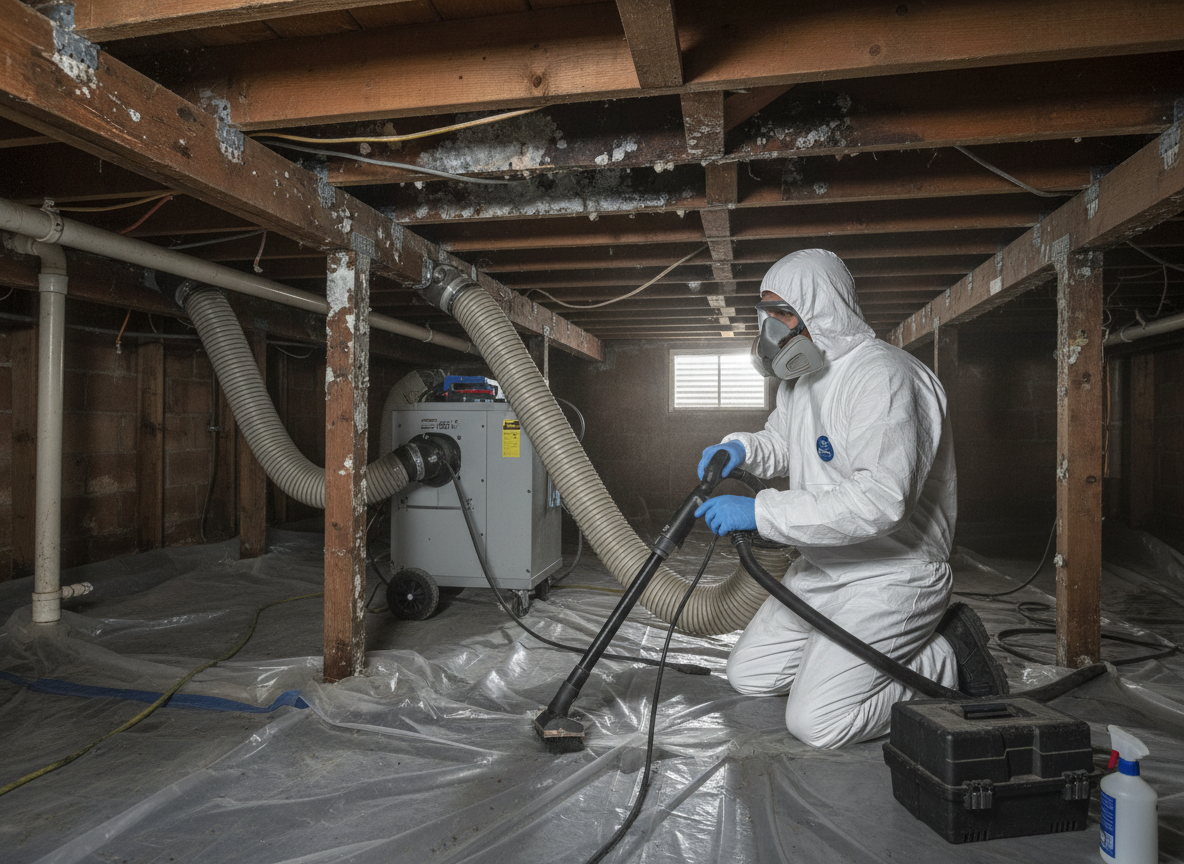
Littlerock homes often sit on raised foundations with crawl spaces that trap humidity during cool winters even in a desert climate. Irrigation from nearby agricultural plots and occasional runoff near the Littlerock Dam can introduce enough moisture to support mold on joists and insulation. Older single-story houses common in the area frequently lack adequate vapor barriers, so surface mold quickly turns into embedded growth that affects indoor air once temperatures rise again in spring.
Removal starts with isolating the space to keep spores from reaching living areas above. Technicians remove wet insulation and rotted wood, then apply antimicrobial treatments to concrete and soil floors that stay damp longer than in drier Palmdale or Lancaster neighborhoods. Proper drying requires monitoring moisture levels in the surrounding soil because residual water can wick back into the space within days if drainage around the foundation is poor.
Homeowners sometimes attempt DIY sprays only to find the mold returns after the next cool spell. Professional work includes sealing penetrations and installing vapor barriers rated for local soil conditions. In Littlerock the combination of sandy soil and occasional winter storms means crews must also check for hidden leaks from irrigation lines that run under many properties near Pearblossom Highway.
Technician insight
In Littlerock, the thing that catches most people out with crawl space mold removal is how winter cool air combined with irrigation seepage near the dam keeps soil damp under older homes long after surface water disappears, so mold regrows if the vapor barrier is skipped.
Hidden Mold in Foundation After Irrigation Leak
A Littlerock homeowner noticed musty smells near the floor. Inspection revealed mold on joists fed by a slow irrigation line leak under a 1980s house close to Littlerock Community Park. Crews removed wet insulation, treated the soil, added a sealed vapor barrier, and corrected drainage. Odors cleared and no recurrence after the next cool season.
How it works
- 1
Initial Assessment
Inspect the crawl space for visible mold, moisture sources, and structural impact while documenting conditions around the foundation.
- 2
Containment Setup
Seal the crawl space from the rest of the home using plastic sheeting and negative air machines to prevent spore migration.
- 3
Material Removal
Extract affected insulation, wood, and debris, then treat remaining surfaces with appropriate antimicrobial solutions.
- 4
Drying and Prevention
Dry the space thoroughly, install vapor barriers, and address drainage issues tied to local irrigation or terrain.
Pricing
Pricing varies with crawl space size, mold extent, and any required structural repairs.