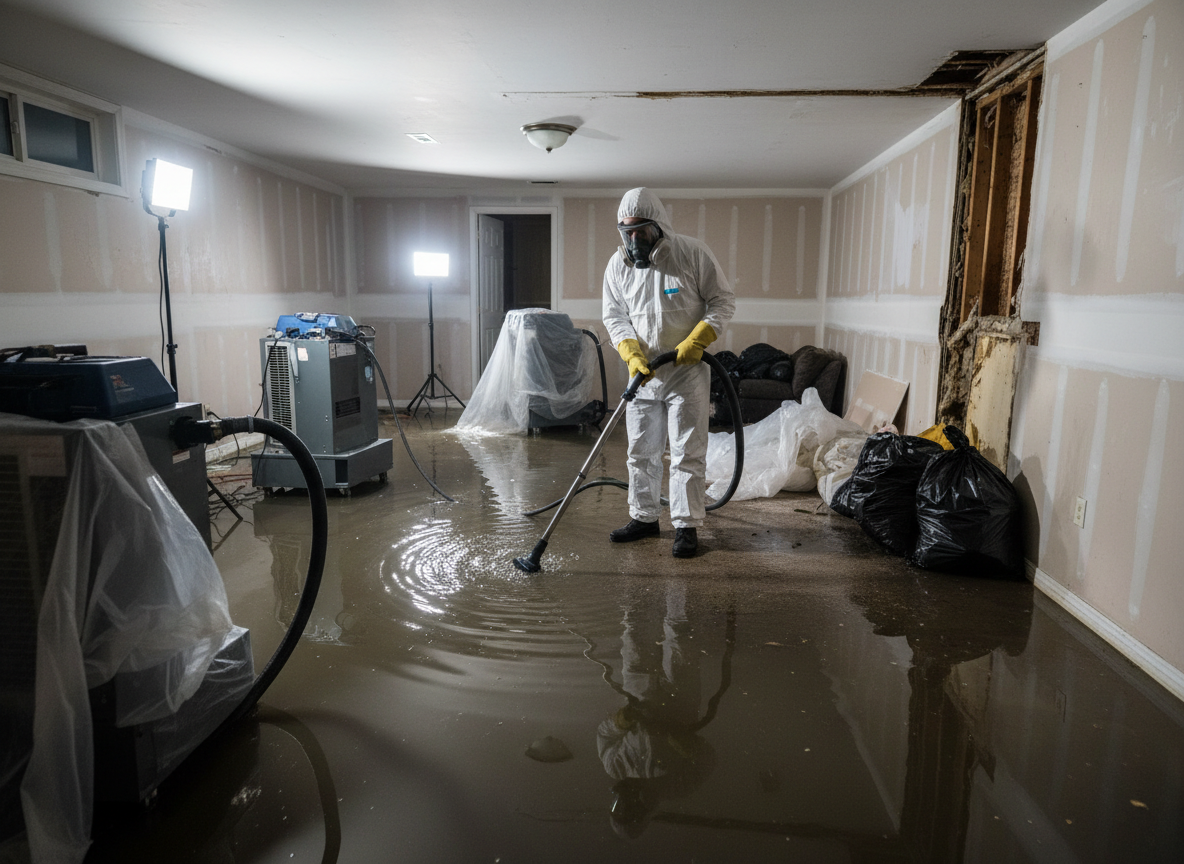
Water damage mitigation in Littlerock starts with stopping active water intrusion before it spreads through older single-story homes common along Pearblossom Highway and around Littlerock Community Park. Desert soils here expand and contract sharply after rare winter rains, often pushing moisture under slab foundations and into wall cavities. Crews use moisture meters and infrared cameras to locate hidden saturation that standard drying fans miss, especially in homes built before modern vapor barriers became standard in Los Angeles County.
Hot summer temperatures accelerate mold growth on wet drywall and insulation once water is removed, while cool winter nights slow evaporation and allow salts to wick up from the ground near the Littlerock Dam spillway area. Technicians remove saturated baseboards and drill weep holes in stucco exteriors to release trapped moisture without full wall demolition. This targeted approach prevents secondary damage that later shows up as warped flooring or musty odors in crawl spaces typical of the area's ranch-style housing stock.
Mitigation also addresses wind-driven rain that enters through roof penetrations and window seals during sudden desert storms, a frequent issue for properties between Littlerock and Lancaster. Extraction equipment is staged to handle both standing water and deeply absorbed moisture in concrete and wood subfloors. Every job includes documenting affected materials so homeowners can see exactly what was removed and why full drying verification with data loggers is required before any reconstruction begins.
Technician insight
In Littlerock, the thing that catches most people out with water damage mitigation is how desert clay soils around the Littlerock Dam hold moisture against older concrete slabs for weeks after a storm. Homeowners often think once the carpet is pulled the problem is gone, but hidden migration under the slab keeps walls wet long after visible water disappears.
Slab Leak Under Older Home Near Littlerock Community Park
A homeowner noticed buckling laminate flooring after winter rains. Inspection found a slow leak under the slab that had wicked moisture into perimeter walls. Extraction and targeted drying of the slab edge and base plates were completed over five days. Daily readings confirmed the structure returned to normal moisture levels before any new flooring was installed.
How it works
- 1
Emergency Assessment
Arrive on site within hours, locate the water source, and map all affected materials using meters and thermal imaging.
- 2
Water Extraction
Remove standing water and saturated contents with truck-mounted pumps and portable extractors suited to slab-on-grade homes.
- 3
Structural Drying
Place air movers and dehumidifiers, then monitor daily moisture readings until walls and floors reach pre-loss levels.
- 4
Antimicrobial Application
Treat remaining surfaces to inhibit mold growth common in the area's temperature swings.
- 5
Final Verification
Provide written drying report and photos before handing the property back for repairs.
Pricing
Upfront quotes after on-site inspection; final cost depends on square footage, water category, and drying duration required by local conditions.