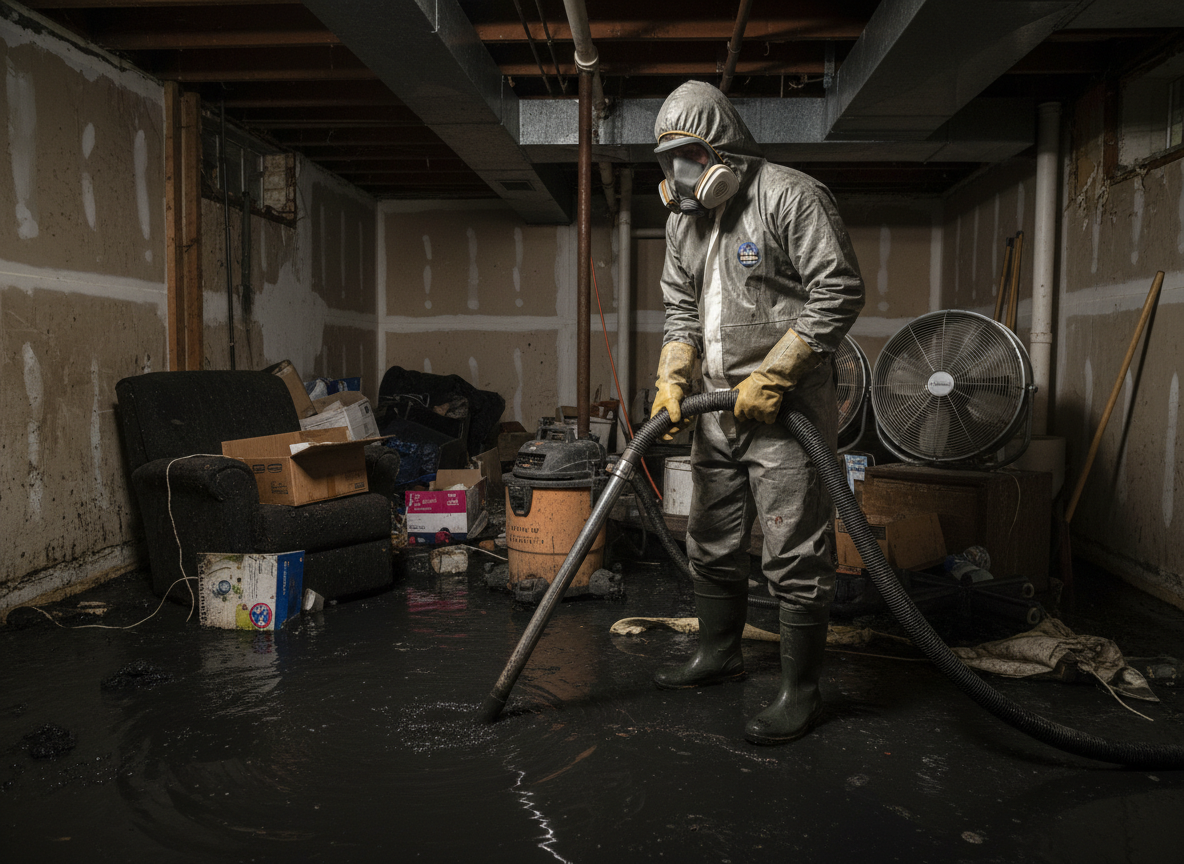
Sewage cleanup in Littlerock often starts with older housing stock built on sandy desert soils that let wastewater migrate quickly under slabs and into crawlspaces. Hot summer temperatures speed bacterial growth on porous materials like drywall and subfloors, while cool winter nights slow evaporation and let odors linger in poorly ventilated homes near Littlerock Dam. Crews must separate black water from gray water early because the county health rules in Los Angeles County treat any mixture as hazardous waste requiring full removal rather than surface cleaning.
Edge cases appear when sewage reaches irrigation ditches or low spots around Littlerock Community Park after monsoon-style rains. The alkaline soil here reacts with cleaning agents, so crews test pH before applying neutralizers to avoid leaving residue that attracts future mold. In homes between Palmdale and Lancaster, shared septic lines from the 1970s frequently back up into laundry rooms; technicians isolate the line at the cleanout before extraction to prevent cross-contamination into neighboring properties.
Drying protocols change with the climate. After extraction, dehumidifiers run longer in winter because low humidity outside does not pull moisture from inside walls the way it does in summer. Technicians monitor moisture meters at multiple depths in concrete and wood framing to confirm levels drop below 15 percent before any reconstruction. Homeowners in Littlerock are advised to keep pets and children out of treated zones until air sampling confirms safe conditions.
Technician insight
In Littlerock, the thing that catches most people out with sewage cleanup is how fast the sandy soil around older homes near Littlerock Community Park lets wastewater travel under the slab during cool winter rains, turning a small backup into hidden contamination that only shows up days later.
Septic Line Backup After Winter Rain
A Littlerock homeowner near Pearblossom Hwy noticed sewage surfacing in the laundry room after a cool spell. We found the line had backed up through an aging joint and spread under the slab into the adjacent bathroom. Extraction, disinfection, and targeted drying of the subfloor prevented further migration into the crawlspace. The home was cleared for use within four days.
How it works
- 1
Site Assessment
Technicians arrive within hours, map the spread of contamination, and test affected materials while protecting unaffected rooms.
- 2
Containment and Extraction
Negative air machines and physical barriers isolate the zone; pumps and vacuums remove standing sewage and saturated debris.
- 3
Cleaning and Disinfection
All surfaces receive staged cleaning followed by application of hospital-grade disinfectants matched to the soil chemistry.
- 4
Drying and Verification
Industrial air movers and dehumidifiers run until moisture readings meet restoration standards, then final clearance testing occurs.
Pricing
Pricing varies with the volume of sewage, square footage affected, and required drying time; we provide an upfront quote after the initial inspection.