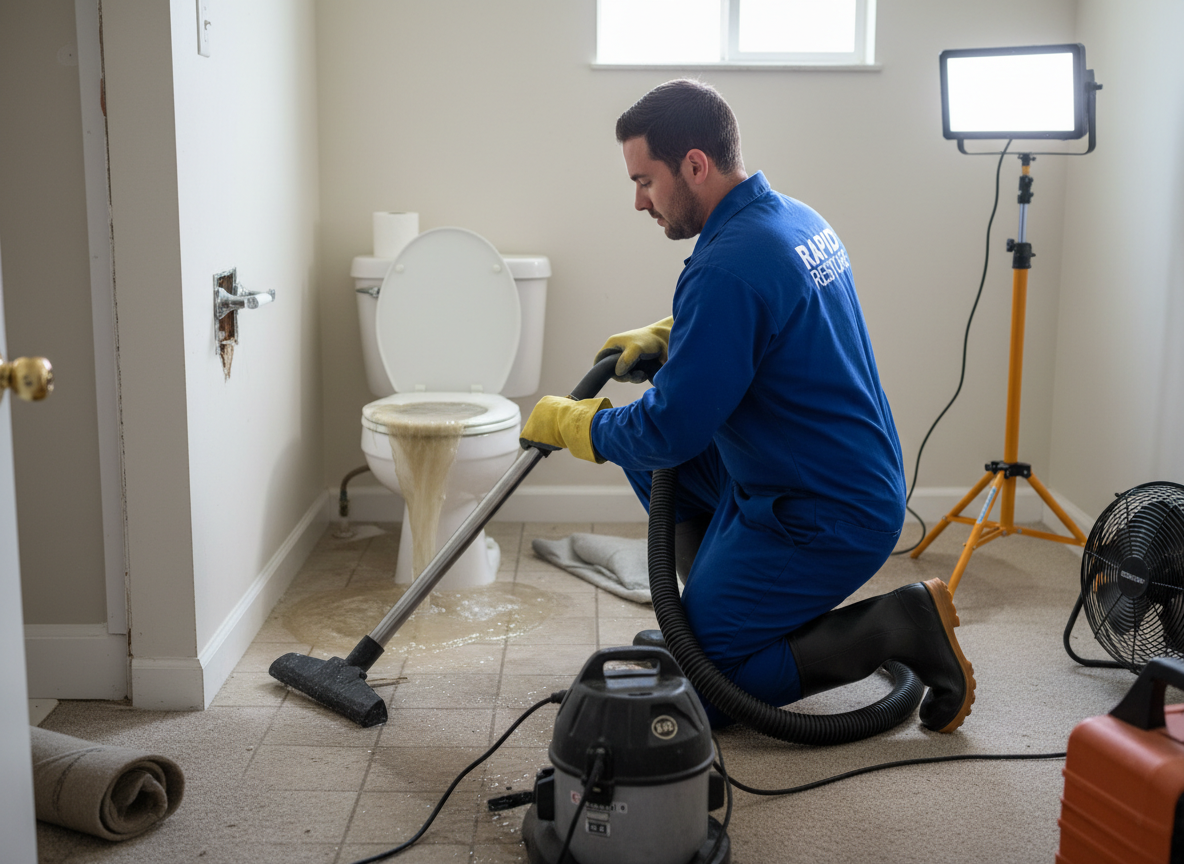
Toilet overflows in Littlerock often involve older plumbing in homes built during the area's growth periods. Desert conditions with hot summers speed up bacterial growth on wet flooring while cool winters slow evaporation, leaving hidden moisture under tile or laminate. Technicians must check subfloors around fixtures because sandy soil near the Littlerock Dam lets water travel farther than expected before surfacing.
Edge cases include overflows reaching HVAC returns or spreading into crawl spaces common in Los Angeles County properties. Proper containment prevents cross-contamination to living areas, and antimicrobial application targets porous materials like baseboards that retain odor. Local terrain with gentle slopes toward Littlerock Community Park can direct runoff into garages or utility rooms if extraction is delayed.
Code considerations in unincorporated Littlerock areas require proper disposal of contaminated water to avoid septic system overloads. Technicians use moisture meters on drywall up to 18 inches above the visible water line because capillary action in stucco homes pulls moisture higher than in coastal regions. Immediate removal of affected carpet padding prevents long-term issues when temperatures drop in winter.
Technician insight
In Littlerock, the thing that catches most people out with Toilet overflow cleanup is how quickly water disappears into the sandy soil near the dam and travels under slab foundations before anyone notices the smell in adjacent rooms.
Overflow Near Littlerock Community Park
A homeowner in a 1980s house noticed water reaching the hallway after a toilet backup. Inspection showed moisture had wicked into the subfloor and traveled toward the garage due to the slight slope. Extraction and targeted drying prevented mold in the wall cavities, and the home was returned to normal use within four days.
How it works
- 1
Initial Assessment
Technician inspects the overflow source, measures affected square footage, and checks for hidden moisture in floors and walls using meters.
- 2
Water Extraction
Portable pumps and vacuums remove standing water from bathrooms and adjacent rooms while protecting unaffected areas with barriers.
- 3
Drying and Dehumidification
Air movers and dehumidifiers run continuously, with daily monitoring to reach dry standards suited to the desert climate.
- 4
Sanitation and Restoration
Antimicrobial treatment is applied, followed by removal of damaged materials and final cleaning before any needed repairs.
Pricing
Cost depends on square footage affected, depth of water penetration, and whether subfloor drying is required; upfront quotes provided after inspection.