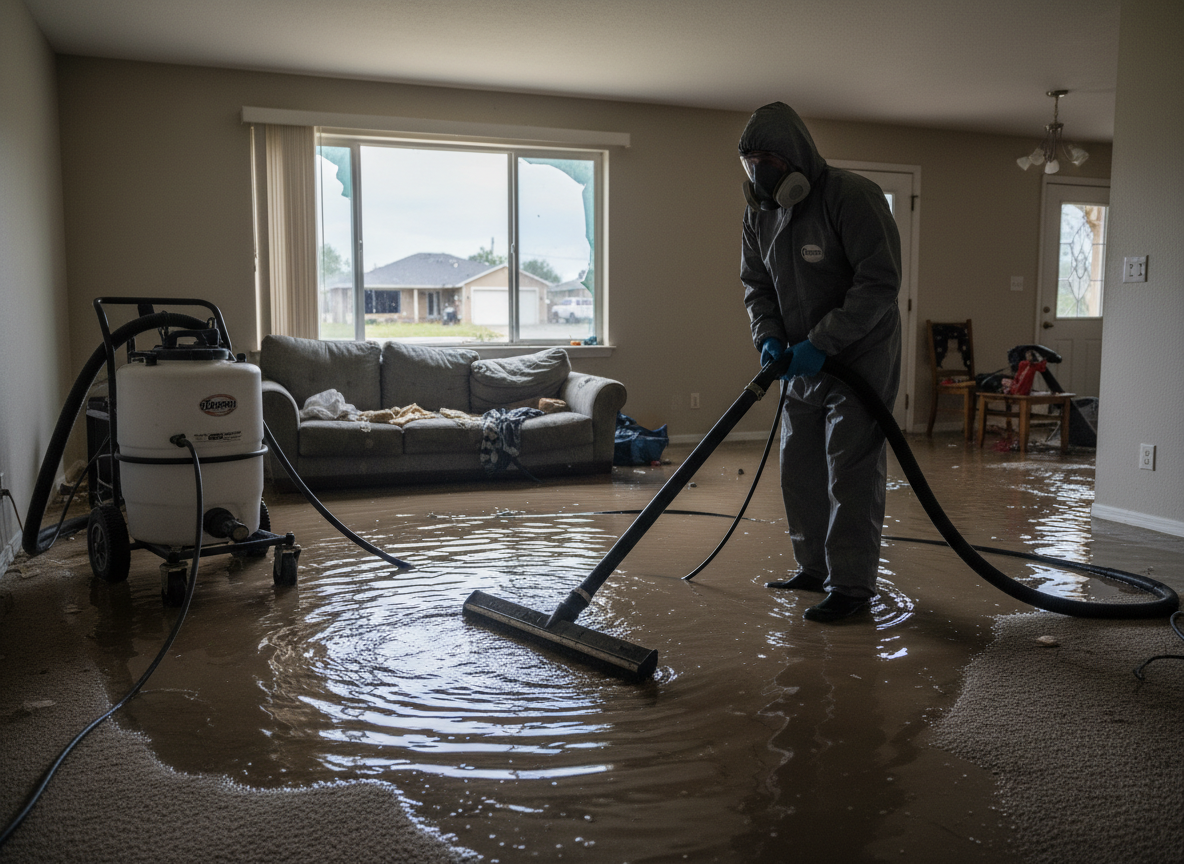
Littlerock sits in the high desert of Los Angeles County where summer heat above 100 degrees can turn standing water into hidden mold within 48 hours while winter nights dip into the 30s and slow evaporation. Older single-story homes near Littlerock Dam and Littlerock Community Park often have slab foundations and limited crawl spaces that trap moisture under flooring after a pipe burst or roof leak. Crews must pull carpet and pad quickly then use industrial air movers aimed under cabinets and into wall cavities to prevent swelling in particleboard subfloors common in 1970s-1990s builds. Without this step, homeowners later face cupping hardwood or musty odors that travel into adjacent rooms.
Water from the California Aqueduct or private wells in the area carries higher mineral content that leaves white residue on drywall once it dries. Technicians test moisture levels in stucco walls and behind baseboards using meters because visual checks miss saturation in the thick plaster found in many Pearblossom Highway properties. When water reaches insulation in exterior walls, the material must be removed in sections rather than left to air dry because desert temperature swings cause condensation cycles that restart mold growth. Extraction trucks parked at the curb on narrow residential streets also require traffic cones and neighbor notifications to avoid blocking access for local farm equipment.
After removal, dehumidifiers sized for 1,500-2,500 square foot homes run for three to five days while technicians monitor daily readings. Desert air is dry but still holds enough humidity during monsoon season to extend drying times when windows cannot be opened due to dust. Final clearance includes checking under sinks and around water heaters for residual dampness that could affect electrical outlets on shared walls with garages, a layout frequent in Littlerock tract homes.
Technician insight
In Littlerock, the thing that catches most people out with water cleanup services is how fast desert heat pushes moisture into the particleboard under vinyl or carpet in homes built before 1990 near the dam. Homeowners often think once the puddle is gone the job is done, but the slab stays damp for days and warps cabinets from below if we do not pull the toe kicks and run air under them.
Hidden Slab Moisture After Kitchen Leak
A pipe under a sink in a 1980s Littlerock home near Pearblossom Highway leaked overnight and soaked the kitchen and adjacent hallway. We found elevated moisture readings three feet into the slab under the vinyl. Extraction removed surface water, then we removed baseboards, ran drying mats under cabinets for four days, and confirmed dry readings before the homeowner replaced the flooring themselves.
How it works
- 1
Arrival and Containment
Technicians arrive within hours, set up containment barriers, and stop the water source using shutoffs at the meter or under sinks.
- 2
Extraction
Standing water is removed with truck-mounted pumps and portable wands from carpets, tile, and hardwood before it migrates to subfloors.
- 3
Drying and Monitoring
Air movers and dehumidifiers are placed, moisture readings logged daily until levels match unaffected areas of the home.
- 4
Final Cleanup
Affected surfaces are sanitized, debris hauled away, and the site left ready for repairs or insurance inspection.
Pricing
Cost depends on square footage affected, depth of water, and whether flooring or drywall must be removed; upfront quotes provided on site.