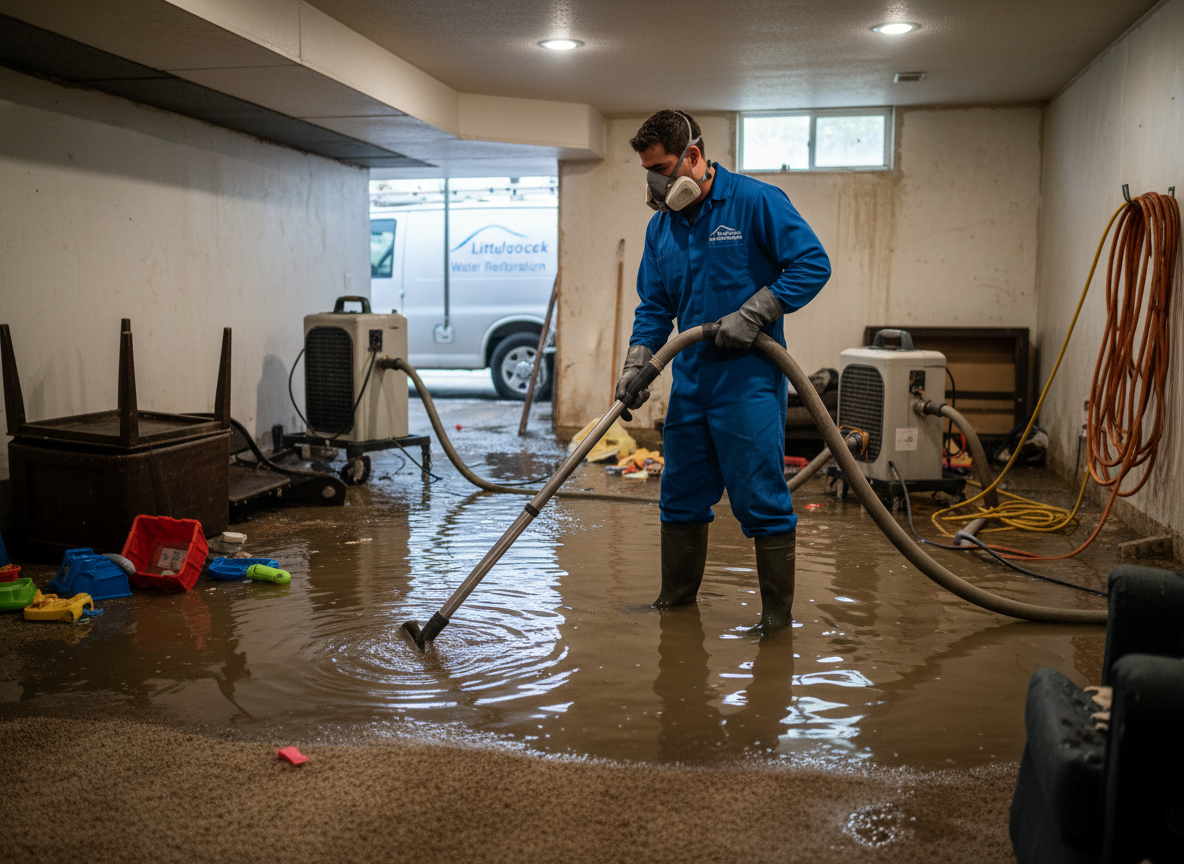
In Littlerock’s high desert setting, water extraction jobs often start with sudden pipe bursts or roof leaks during cool winter nights when temperatures drop and older homes around Pearblossom Highway experience contraction stress on plumbing joints. Crews use truck-mounted extractors and moisture meters to pull water from carpet pads and subfloors before it migrates toward the sandy soils common near Littlerock Dam. Delaying extraction here lets moisture wick into stucco walls and create hidden mold pockets that later require wall cavity drying.
Homes built before the 1990s in the Littlerock and nearby Palmdale corridors frequently sit on raised foundations with crawl spaces that trap water after heavy summer thunderstorms. Extraction teams must navigate low clearances and remove water without disturbing aged insulation or disturbing the shallow root systems around Littlerock Community Park properties. Portable submersible pumps and air movers are staged to push dry air across the slab while monitoring relative humidity to avoid warping hardwood floors common in Lancaster-adjacent neighborhoods.
Los Angeles County code requires that any extraction leaving residual moisture above 15 percent be documented before drywall repair begins. Local operators carry infrared cameras to locate water that has traveled under tile in kitchens and bathrooms, especially after irrigation line failures that are frequent during hot summer afternoons. Proper extraction prevents the alkali salts in desert soil from wicking upward and staining baseboards once the water is gone.
Technician insight
In Littlerock, the thing that catches most people out with water extraction is how quickly water disappears into the sandy soil around older slab homes near the dam, making it look dry on the surface while it has already wicked under the foundation and into wall cavities.
Winter Pipe Burst Near Pearblossom Highway
A kitchen supply line froze and burst overnight in a 1970s Littlerock home. Standing water had already reached the living room carpet and migrated under the slab edge. Extraction crews removed 400 gallons, mapped moisture into the adjacent hallway, and ran drying equipment for four days until readings matched the rest of the house.
How it works
- 1
Arrival and Safety Assessment
Technicians arrive within the hour, shut off water sources, and mark electrical hazards before any equipment enters the structure.
- 2
Standing Water Removal
Truck-mounted and portable extractors pull bulk water from floors, carpets, and low-lying areas while containing runoff to protect adjacent rooms.
- 3
Moisture Mapping
Infrared cameras and pin meters locate hidden moisture in walls, subfloors, and crawl spaces typical of Littlerock’s older housing stock.
- 4
Drying and Monitoring
Air movers and dehumidifiers are positioned; daily readings continue until moisture levels match unaffected materials in the home.
Pricing
Cost depends on water volume, affected square footage, and access challenges in crawl spaces or under slabs; upfront written quotes are provided before work begins.